



Designing landscape lighting looks simple, until the project scales.
What starts as a clean idea quickly turns into a system of scattered fixtures, complex underground cabling, and ongoing maintenance challenges. And there’s one issue that rarely gets enough attention: landscapes don’t stay the same.
Plants grow. Trees shift. Spaces evolve.
So the real question is not how to light a landscape, but how to design lighting that can adapt over time.
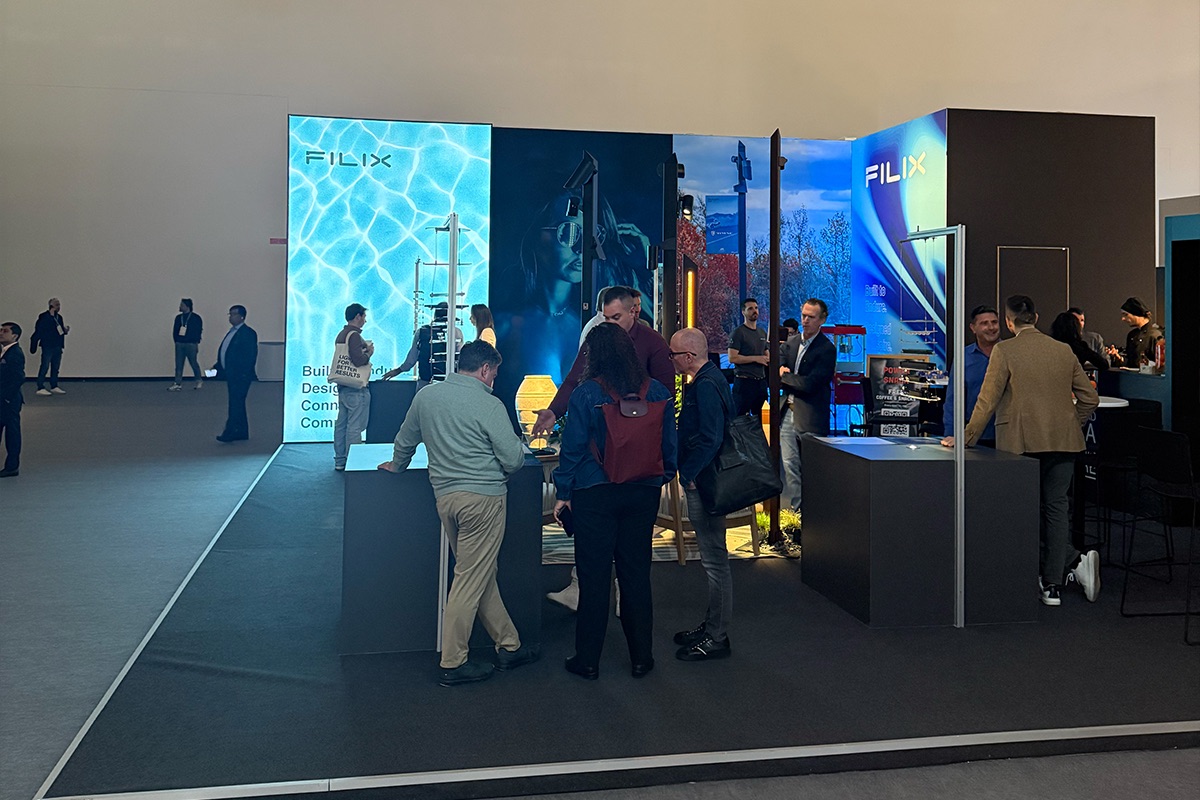
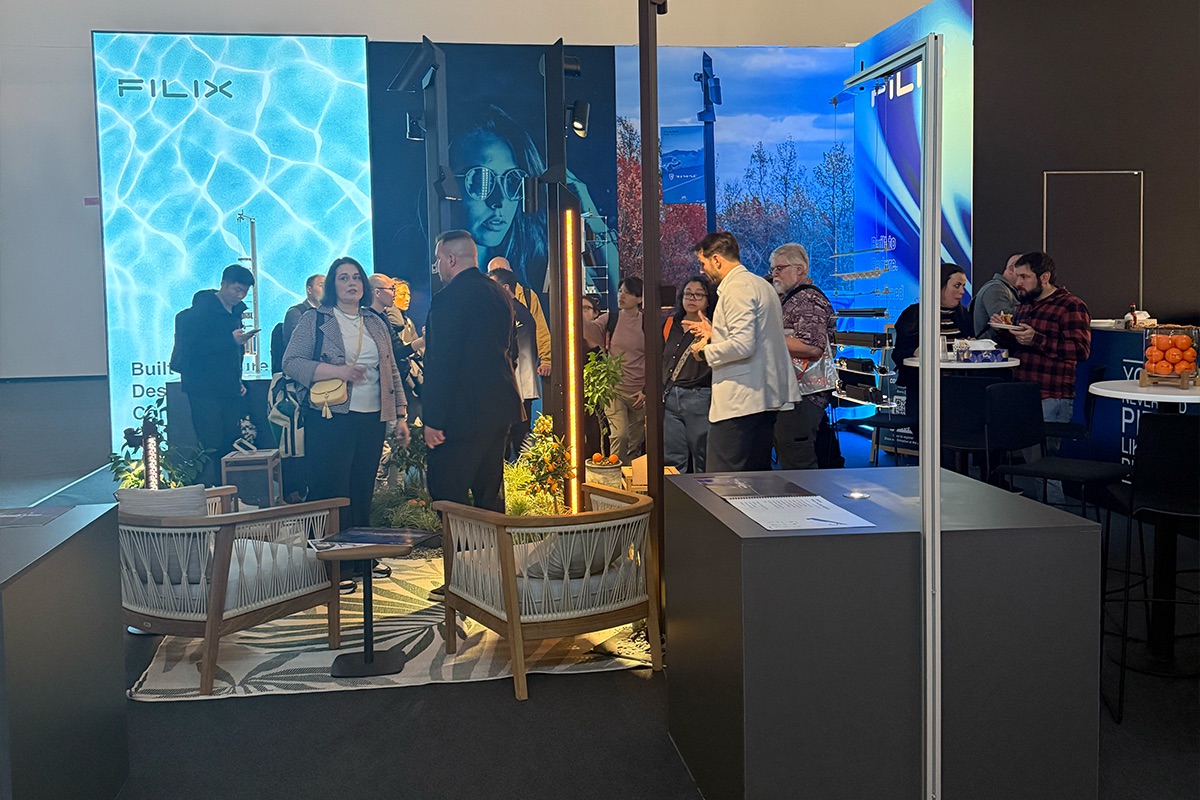
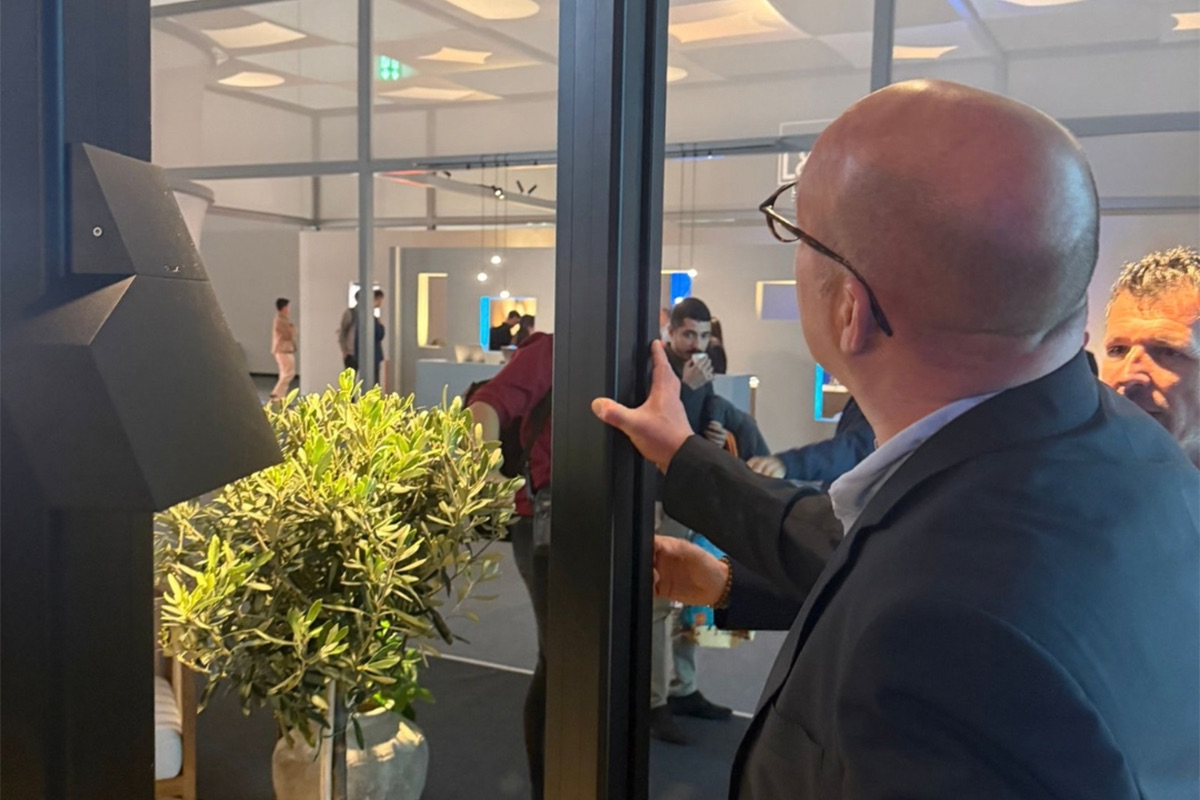
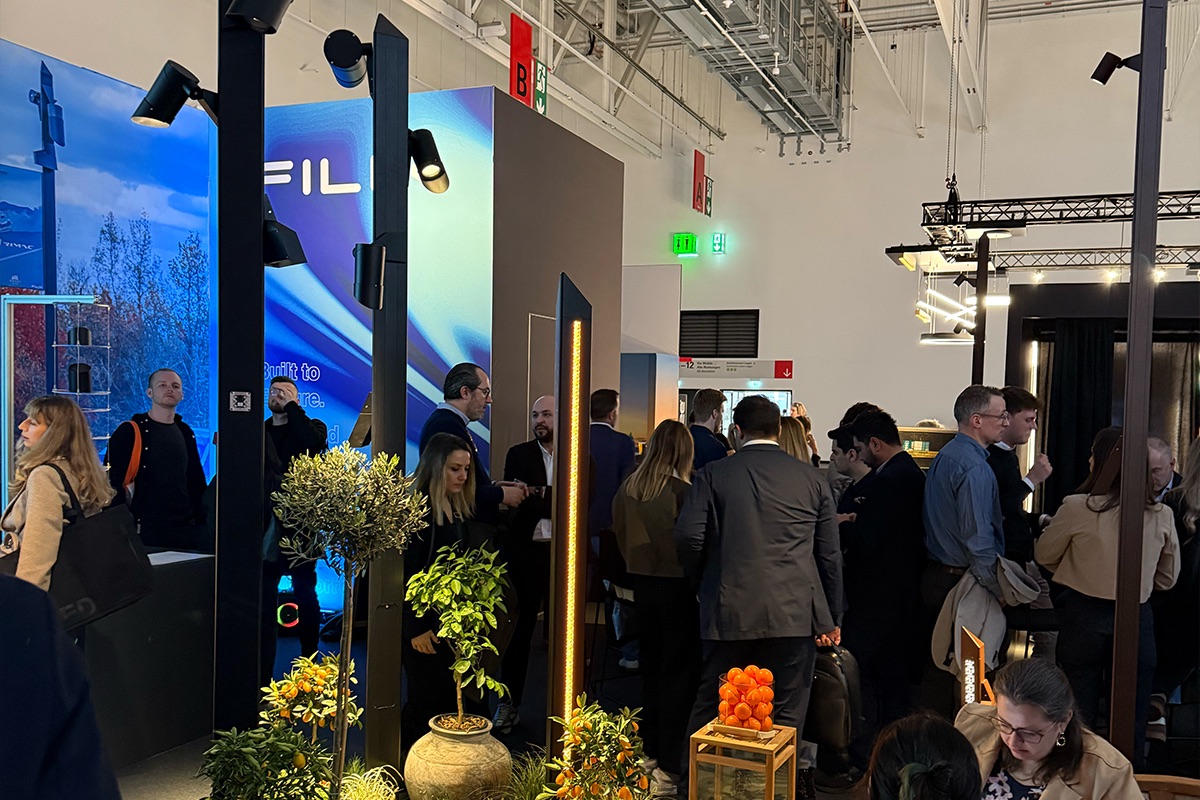
At Light + Building 2026, Filix approached this question directly. At the center of its booth stood TRIA SYSTEM, presented as the final step in how the company approaches light.
Why Light + Building Matters
Light + Building is not just a trade fair. It’s where the direction of the industry becomes visible.
Bringing together lighting design, electrical engineering, and smart building solutions, the event reflects how these fields are increasingly connected. The focus is no longer only on fixtures, but on systems, how light integrates into architecture, infrastructure, and everyday environments.
That context matters.
Because TRIA fits directly into this shift.
The Evolution of Filix
To understand TRIA, you have to understand how Filix got there.
The company began with underwater lighting, one of the most demanding environments for any product. In those conditions, failure is not an option. Materials, sealing, optics, and long-term performance all have to work without compromise.
That mindset became the foundation.
From there, Filix expanded step by step:
• Underwater — where durability and precision are defined
• In-ground — where performance enters architecture
• Urban structures — where scale and exposure increase
• Projectors — where light becomes more controlled and intentional
• Landscape systems (TRIA) — where everything connects
Each stage builds on the previous one. The same principles are applied to new environments, new scales, and new challenges.
The Real Problem with Landscape Lighting
Traditional landscape lighting works, but it comes with limitations.
On larger projects, those limitations become obvious:
• A high number of luminaires across the site
• Complex underground cabling systems
• Multiple installation points and connection boxes
• Difficult and costly maintenance
And most importantly:
Once everything is installed, it’s difficult to change.
This becomes a real issue over time. Landscapes are not static. Plants grow, trees expand, and materials change. What worked on day one rarely looks the same after a few seasons.
Lighting, however, often stays fixed.
That gap between a changing environment and a static system is where most problems begin.
What TRIA Changes
TRIA addresses this by shifting the approach, from individual fixtures to a structured system.
From Fixtures to Structure
Instead of distributing luminaires across a landscape, TRIA organizes them around a central structure.
A single pole can support multiple lighting functions, reducing the number of installation points and simplifying the layout.
Simpler Installation
The system is based on a 48V quick-connect setup.
• Integrated cabling within the structure
• Fewer underground connections
• Faster and more controlled installation
This directly reduces complexity during the build phase.
Flexibility on Site
Lighting decisions don’t always happen perfectly on paper.
TRIA allows luminaires to be mounted and repositioned without tools. Adjustments can be made during installation, and after.
That changes how projects are delivered.
Built for Change
As landscapes evolve, lighting needs to adapt.
With TRIA, luminaires can be repositioned, added, or adjusted over time. The system supports changes instead of resisting them.
More Than Lighting
TRIA is not limited to illumination.
The structure can also integrate:
• Signage and visual communication
• Sensor systems
• Connectivity features
This opens up new possibilities for public spaces, hospitality projects, and urban environments where multiple functions are expected from a single element.
Designing at Scale
The impact of this approach becomes clearer at scale.
Take a large landscape project—tens of thousands of square meters.
Key concerns quickly add up:
• Installation logistics
• Cable routing and compliance
• Long-term maintenance
• Uncertainty in how the landscape will develop
Traditional systems handle these issues by adding more components.
TRIA reduces them by simplifying the structure.
Fewer positions. Less cabling. More control.
And most importantly, more flexibility over time.
Lighting as Infrastructure
This is where the shift becomes clear.
Lighting is no longer just about placing fixtures.
It becomes part of the infrastructure of a space.
Structured. Integrated. Adaptable.
Instead of working around architecture and landscape, it becomes part of how those environments are built and experienced.
This aligns with broader changes in the industry, where lighting is expected to connect with technology, respond to environments, and support multiple functions within a single system.
Why TRIA Was at the Center of the Booth
At Light + Building, TRIA was positioned as the final step in the Filix booth journey.
Not because it replaces everything that came before, but because it connects it.
The knowledge developed in underwater conditions, applied to architecture, expanded to urban scale, and refined through precision lighting.
TRIA shows what happens when that logic is applied at system level.
What This Means Going Forward
The direction is clear.
Landscape lighting is moving away from fragmented solutions toward structured systems.
Projects are becoming more complex. Environments are changing faster. Expectations are higher.
And static solutions are harder to justify.
TRIA represents one answer to that shift.
Not by adding more, but by organizing better.